Storytelling
Style & Standards
Art direction and production standards that define a visual language for live events and global broadcasts.
Date
2025
Client
Amazon
Role
Senior Creative Producer
Deliverables
PowerPoint Templates
Speaker Prep & Coaching
Kickoff agenda
Storyboards
Data Handling
Style Guide

CHALLENGE
Unify content segments with a shared visual language to create a seamless conversation.
The broadcast mixed dense financial data, emotional recognition moments, and strategic narratives across a live stage, broadcast capture, and accessibility feeds. Each format demanded distinct priorities while maintaining systemic consistency.
Visual Foundations
Established standards governing how visual support looked, scaled, and performed across live and broadcast conditions.
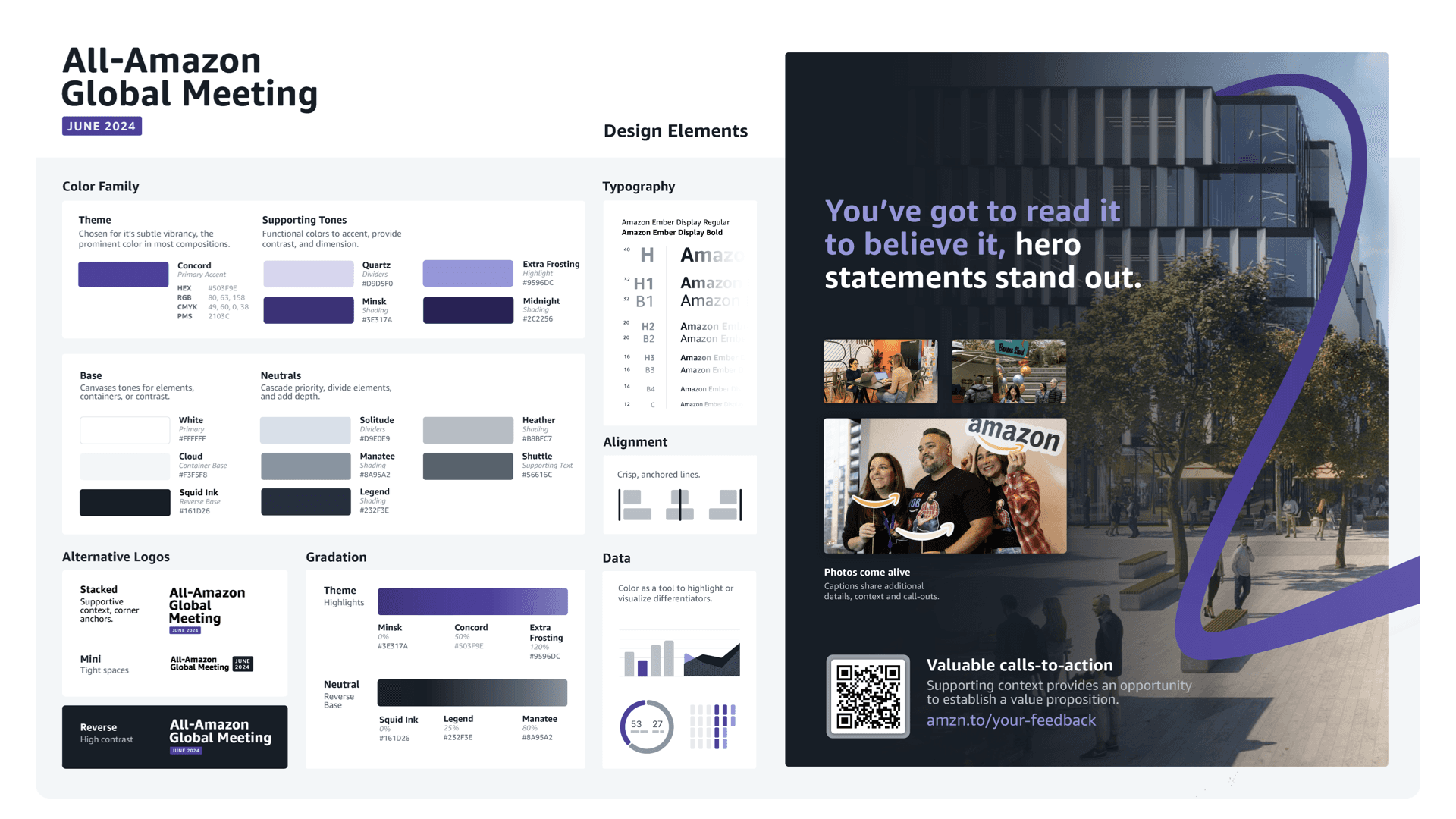
Design Elements
Defined the brand’s core building blocks: color, type, logos, gradients, and data styling and demonstrated how they work together in real application.
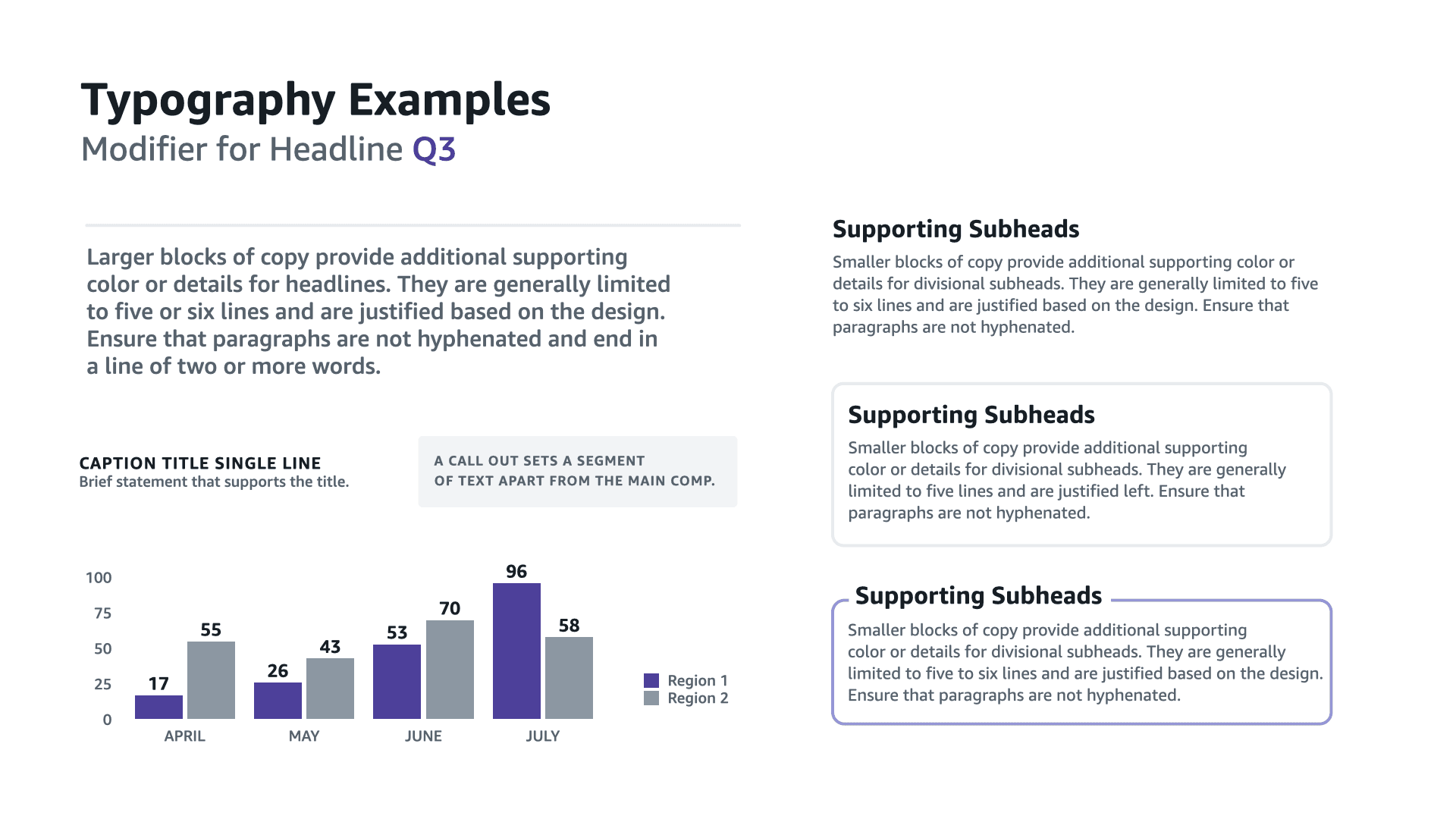
Typography
Established hierarchy across headlines, captions, body copy, and labels combined with spacing and line-length standards to help keep dense information legible.
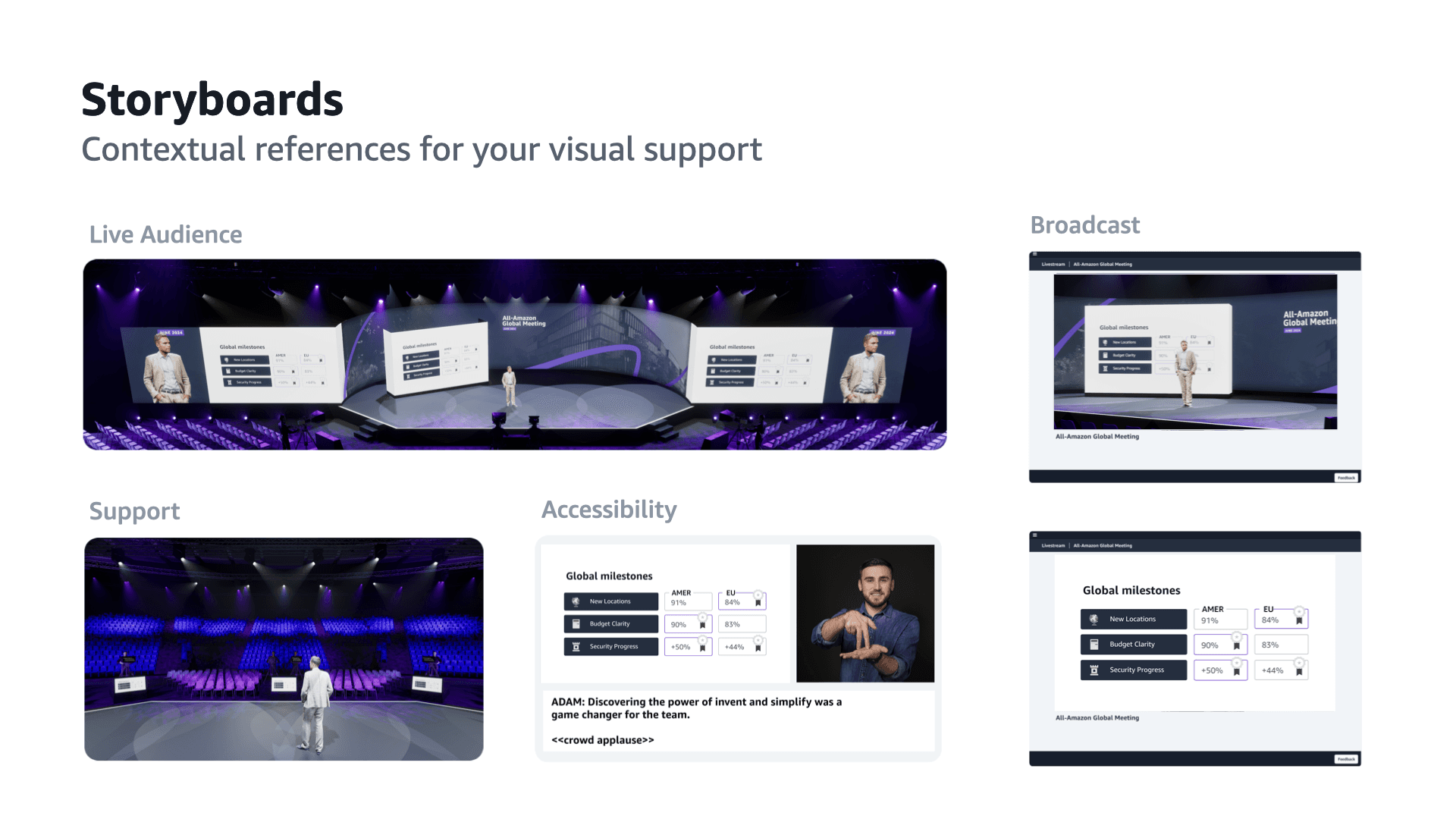
Storyboard References
Mapped sightlines across live, broadcast, support, and accessibility views to surface constraints early and avoid costly late-stage revisions.
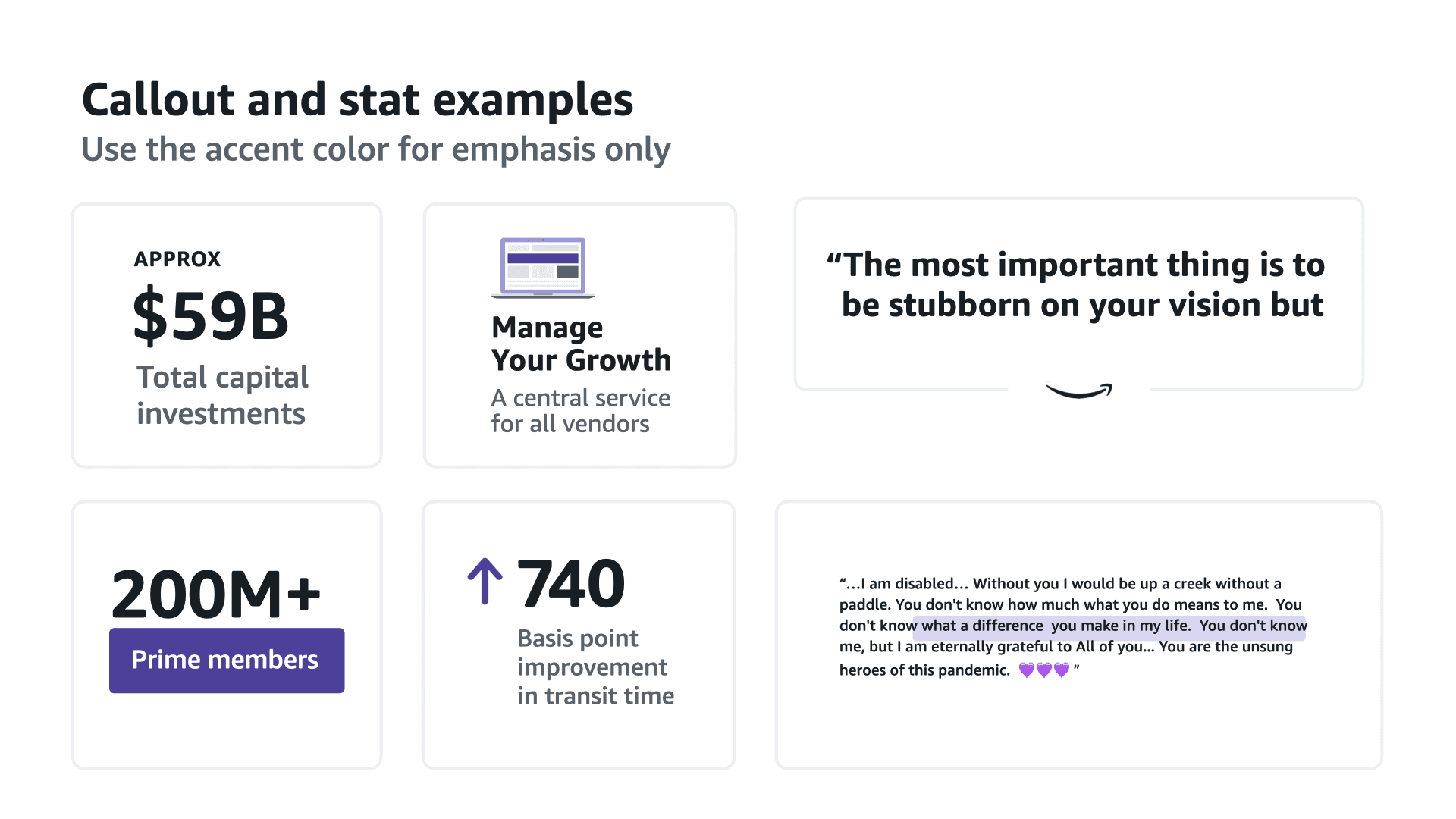
Call Outs + Statistics
Standardized metric and quote treatments, reserved accent color for true emphasis, and used typographic hierarchy to spotlight key information.

Resources
Stage & Camera Backgrounds
A variety of environments for stages big and small make setting the right scene easier. Best practices, FAQ's and connections to internal technical support if you need a hand.
DATA STORYTELLING
Turning metrics into
bite-sized visual stories
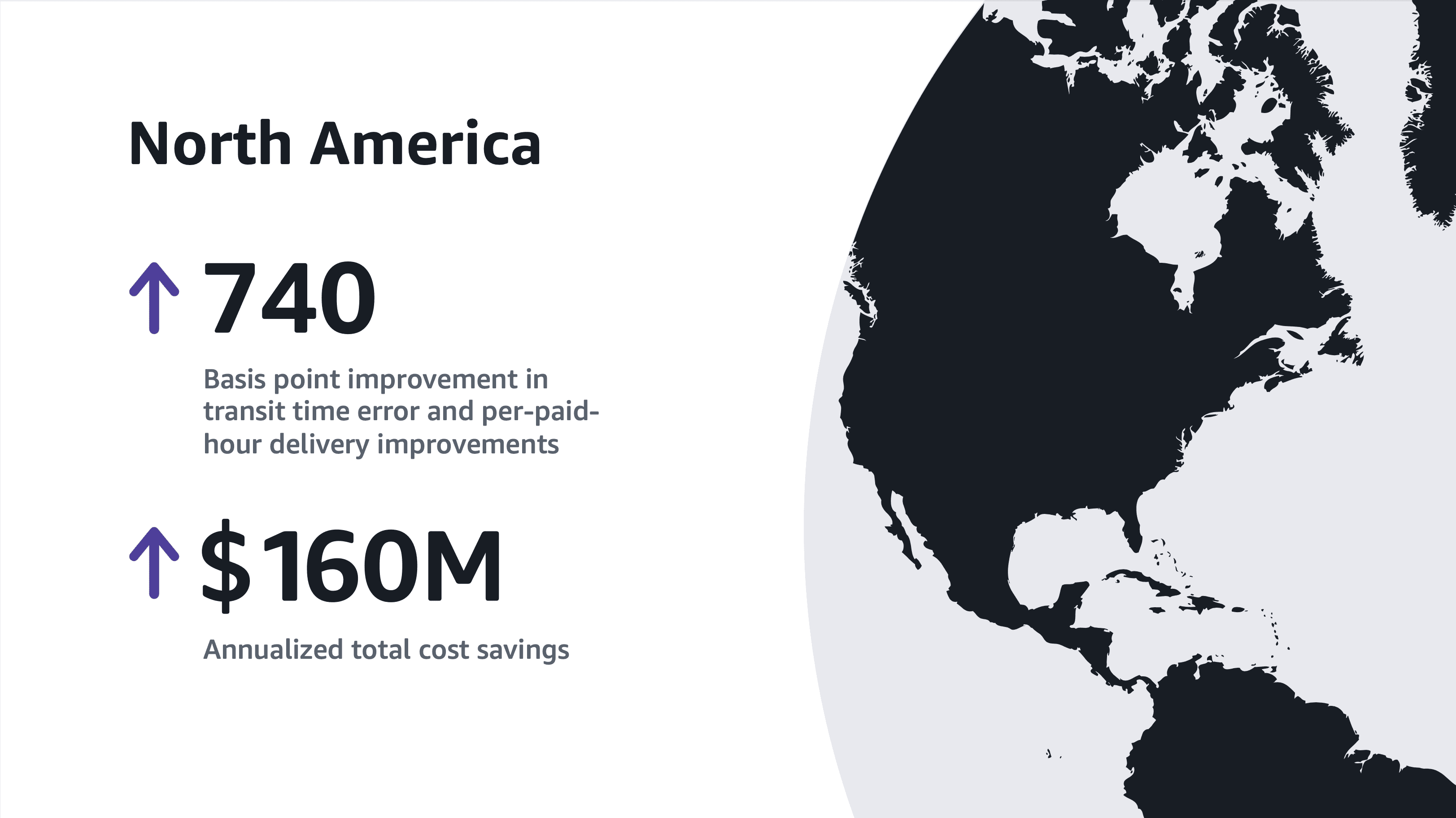
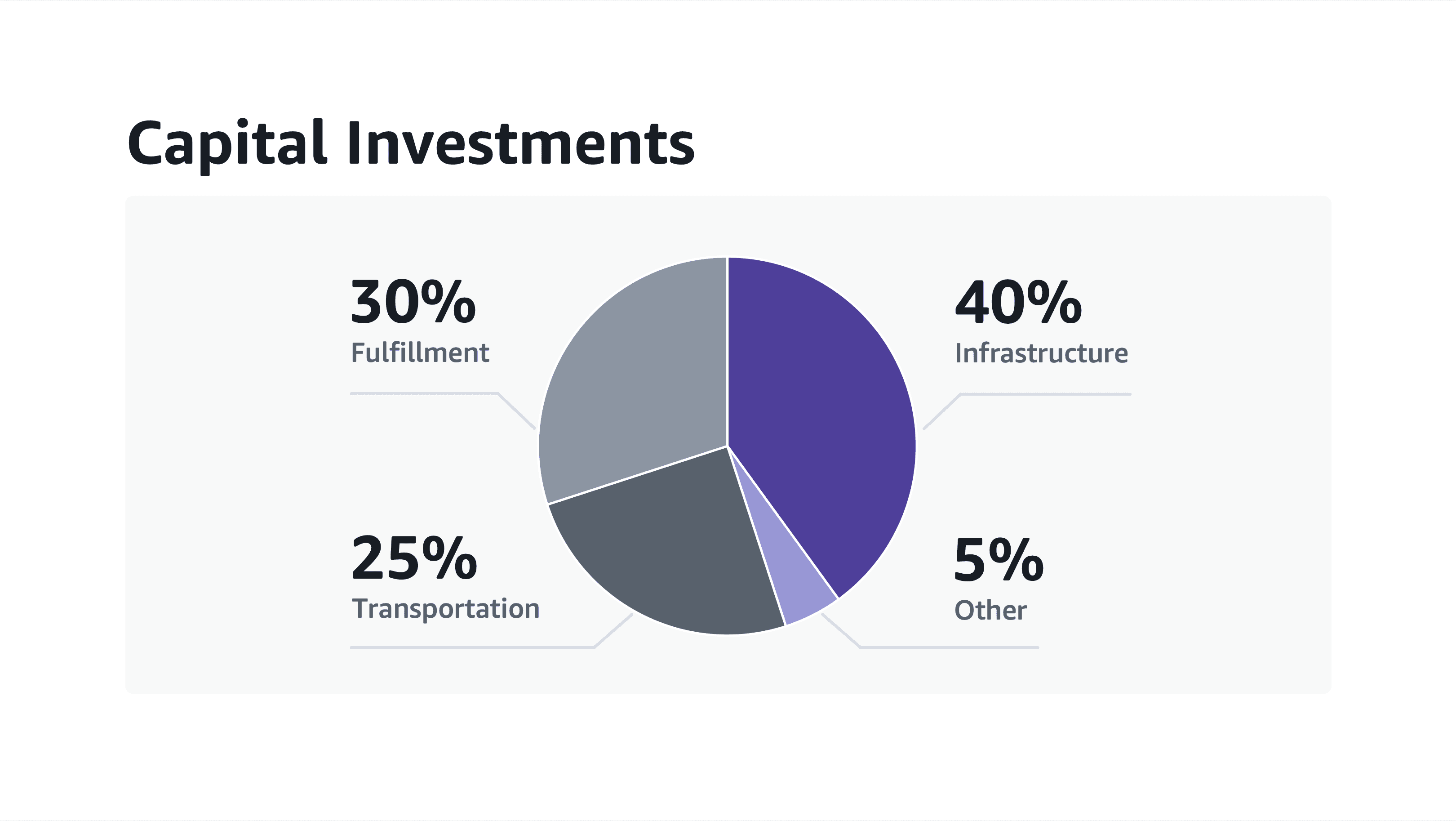
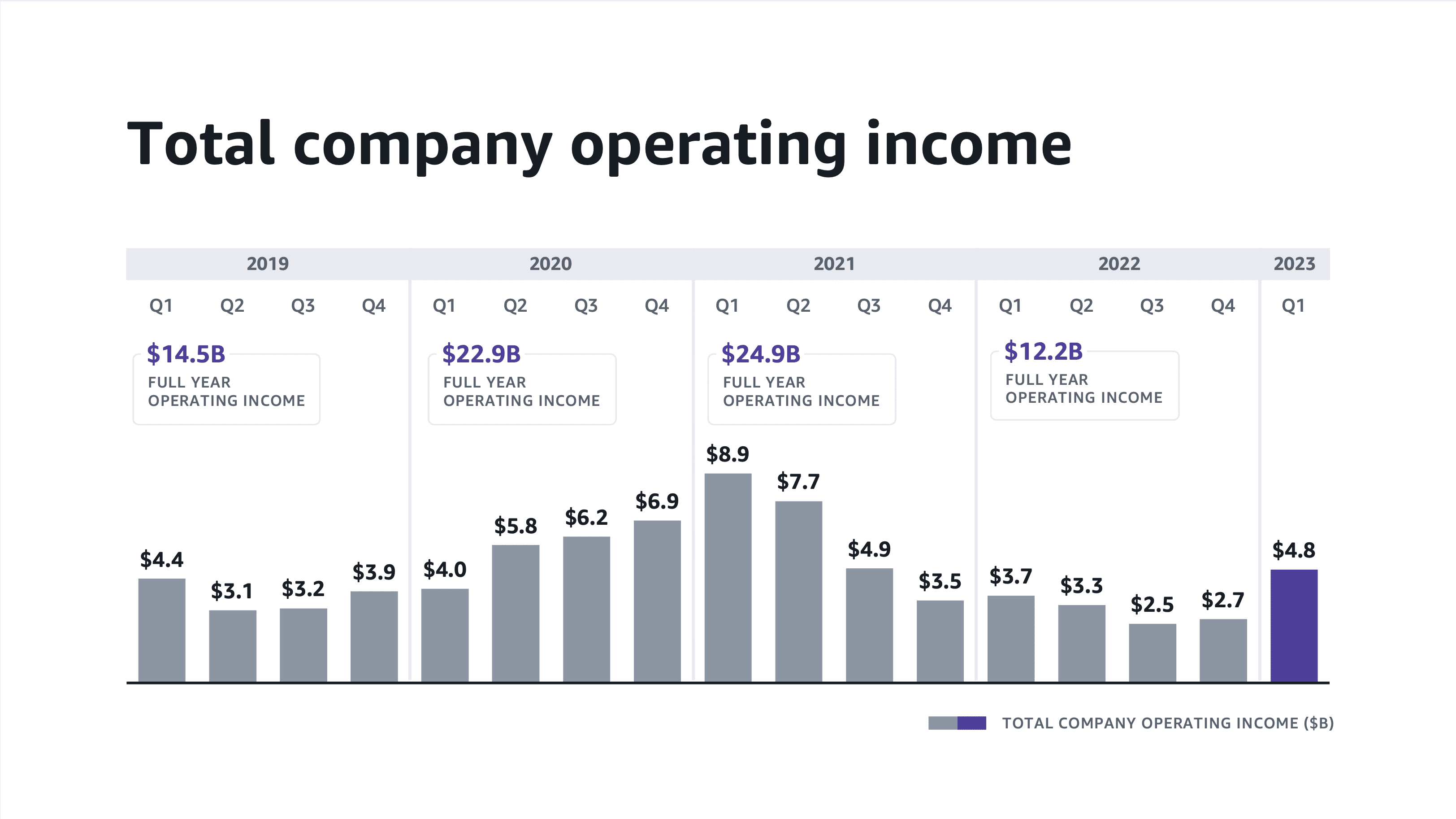
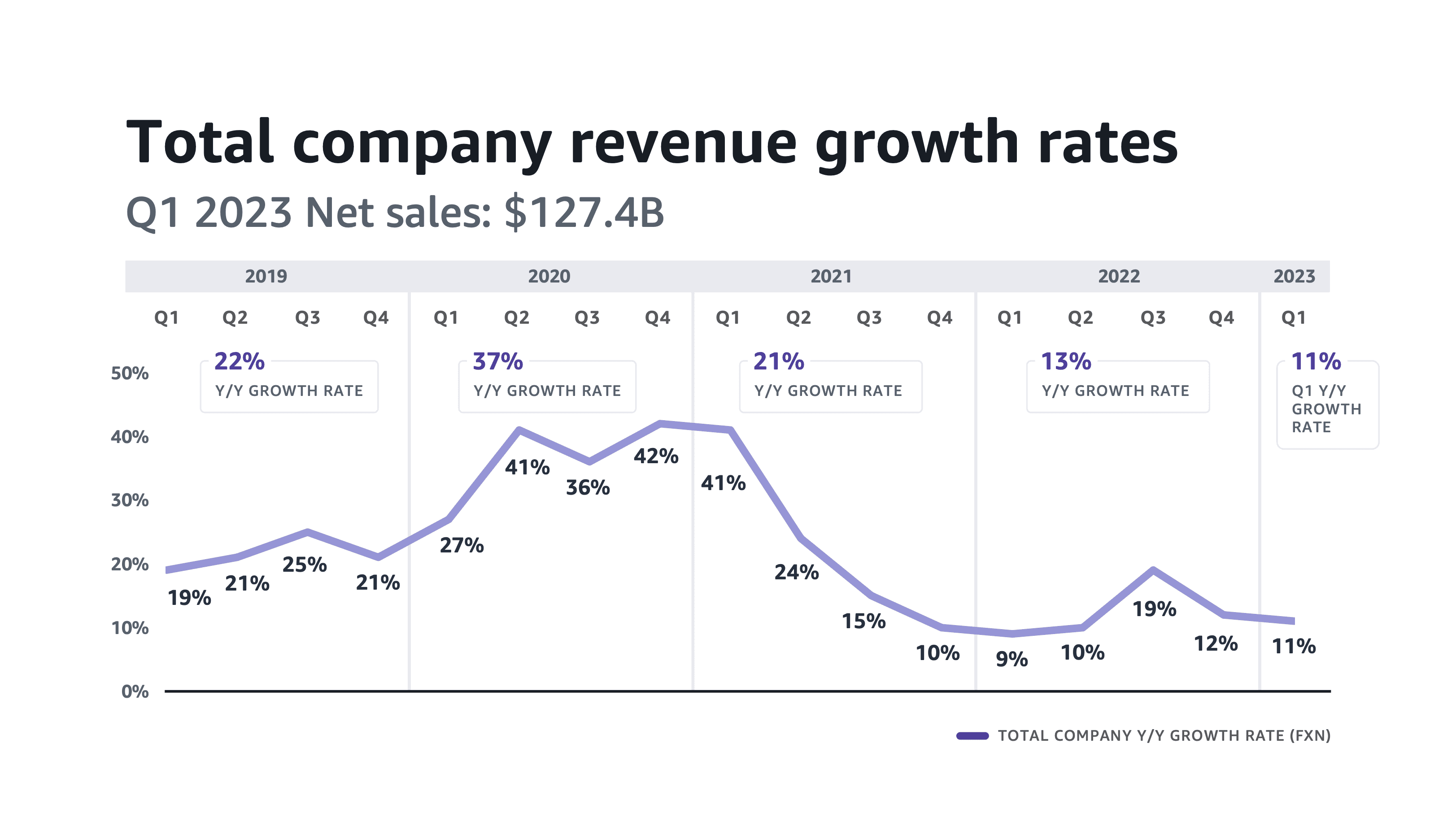
Plug and play templates for finance, operational, and regional metrics. Charts with clear hierarchy using restrained color for comprehension. Supporting statistics with large numeric displays and concise explanatory copy.
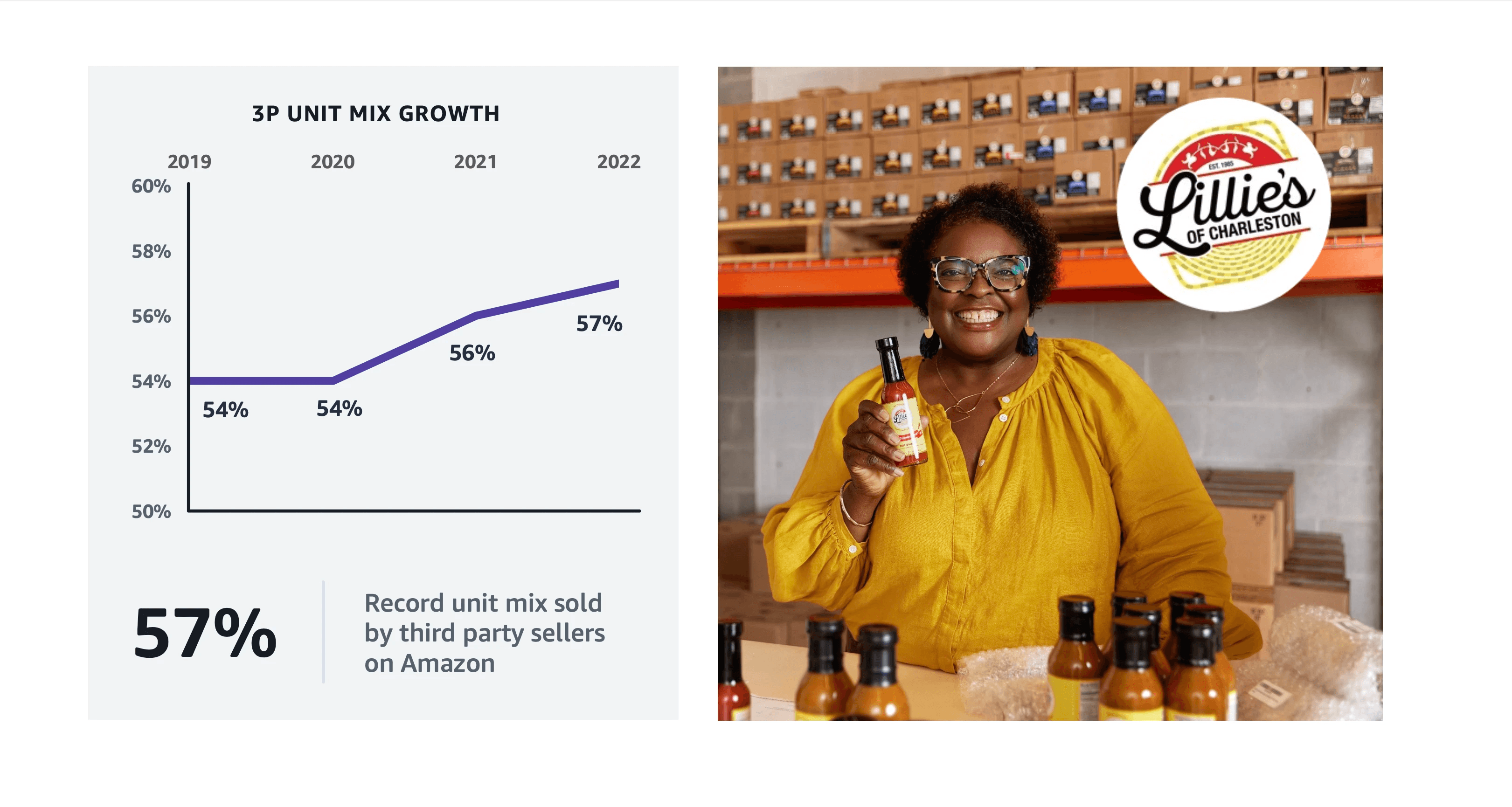
VisualisationS
Complex ideas,
simple visuals
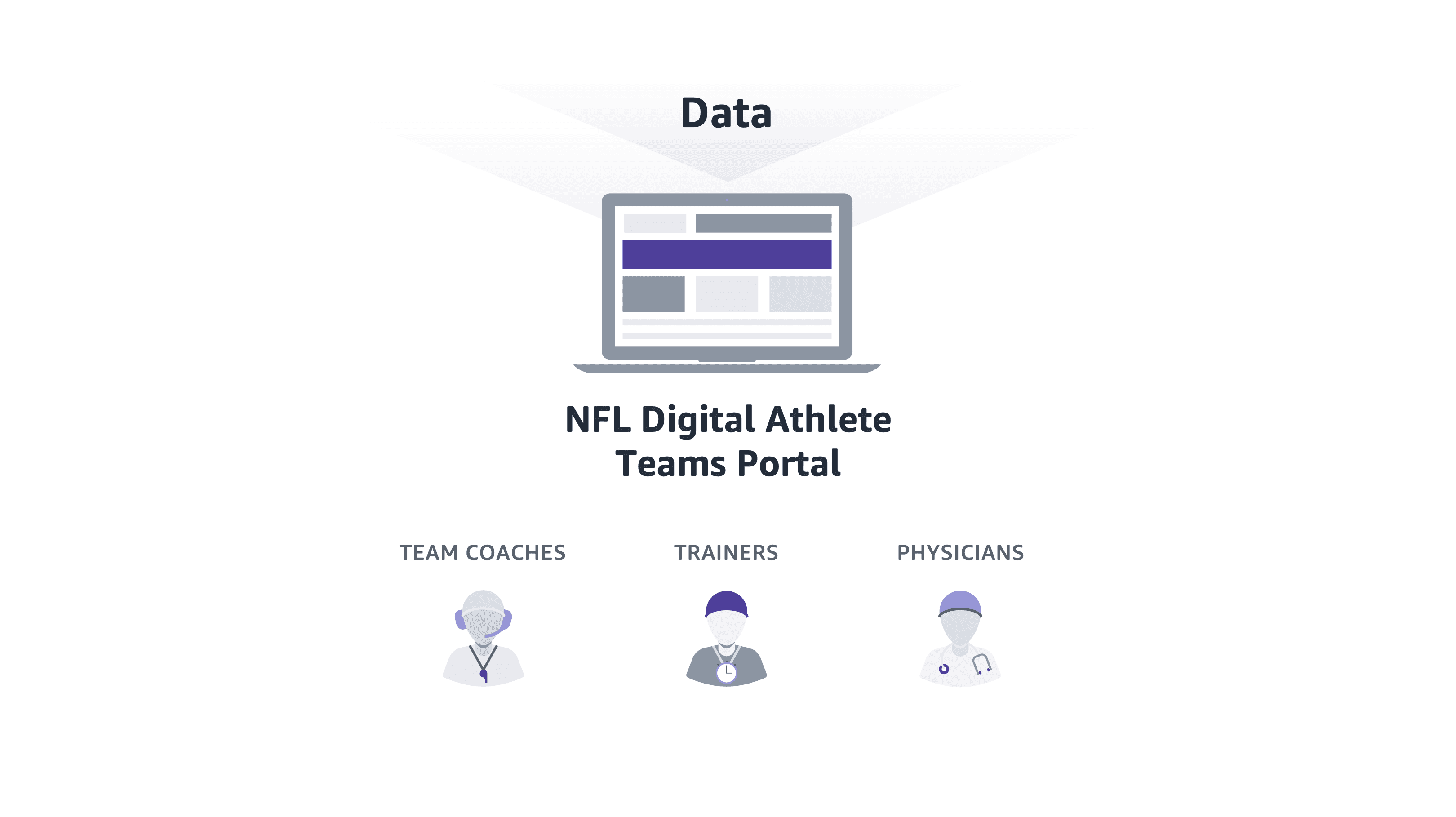
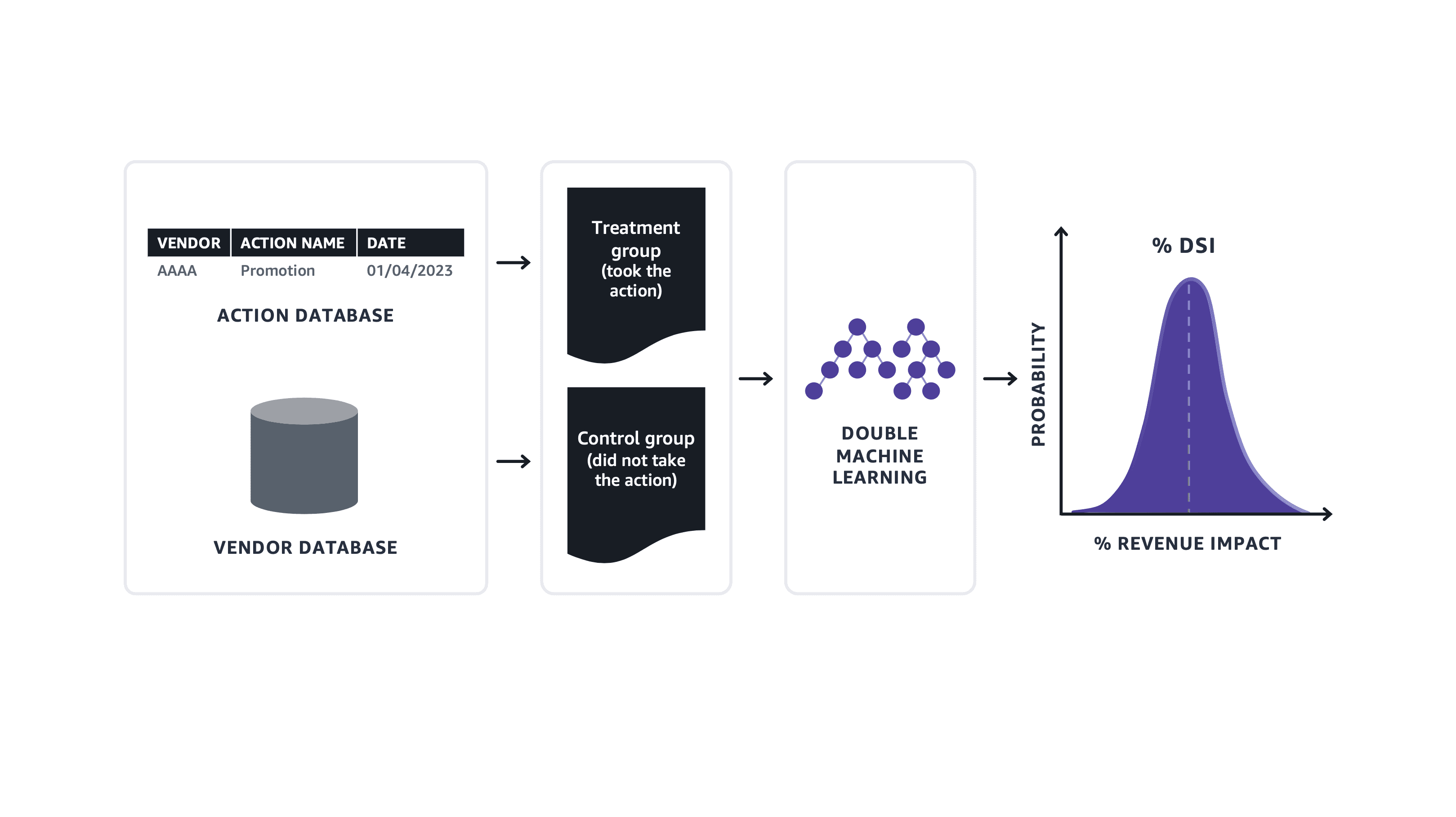
Visual frameworks for explaining systems, processes, and strategic ideas. Diagrams, icons, timelines, and conceptual models made complex topics easier to follow.
ENGAGEMENT
Interaction, learning, and action
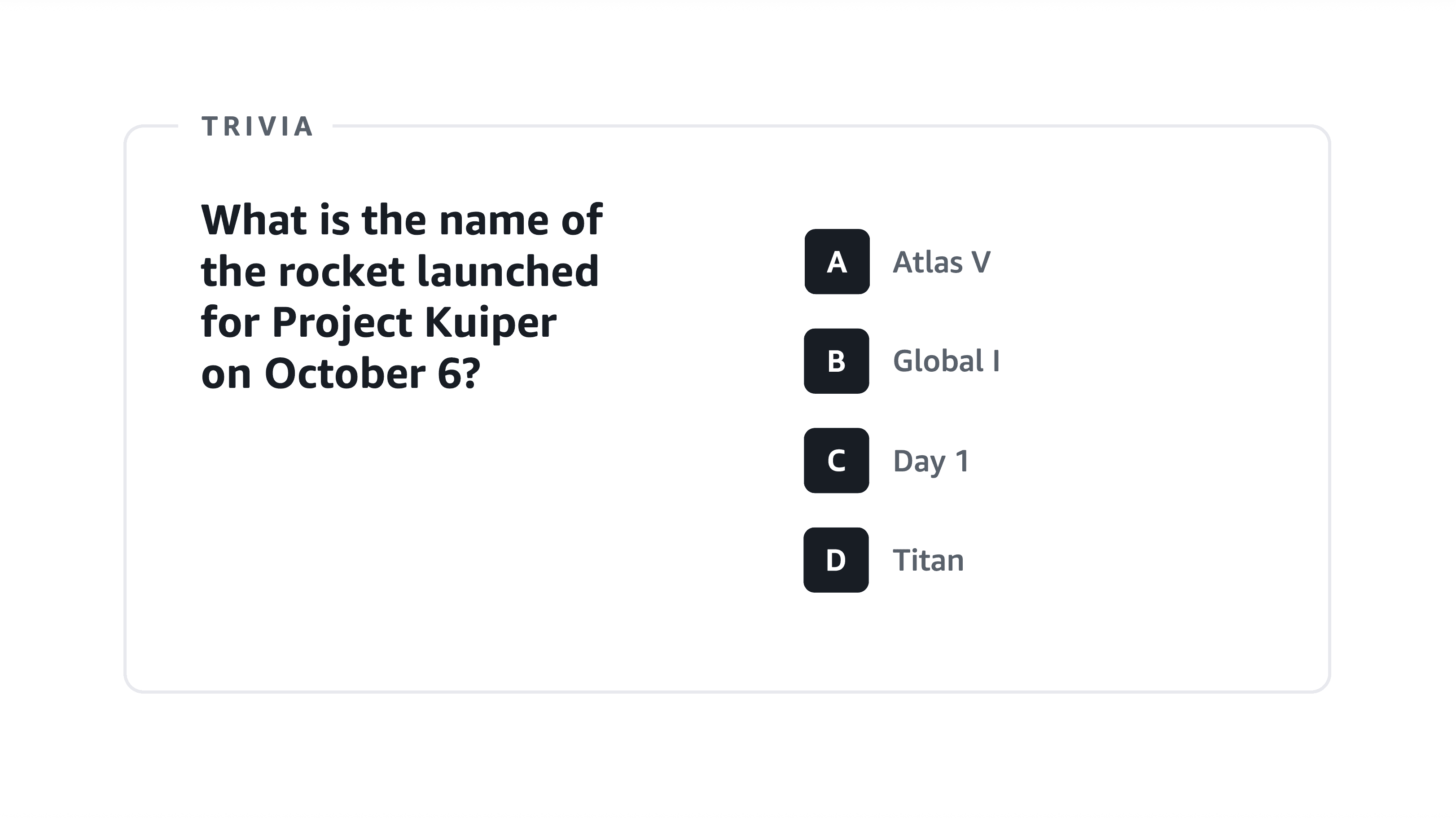
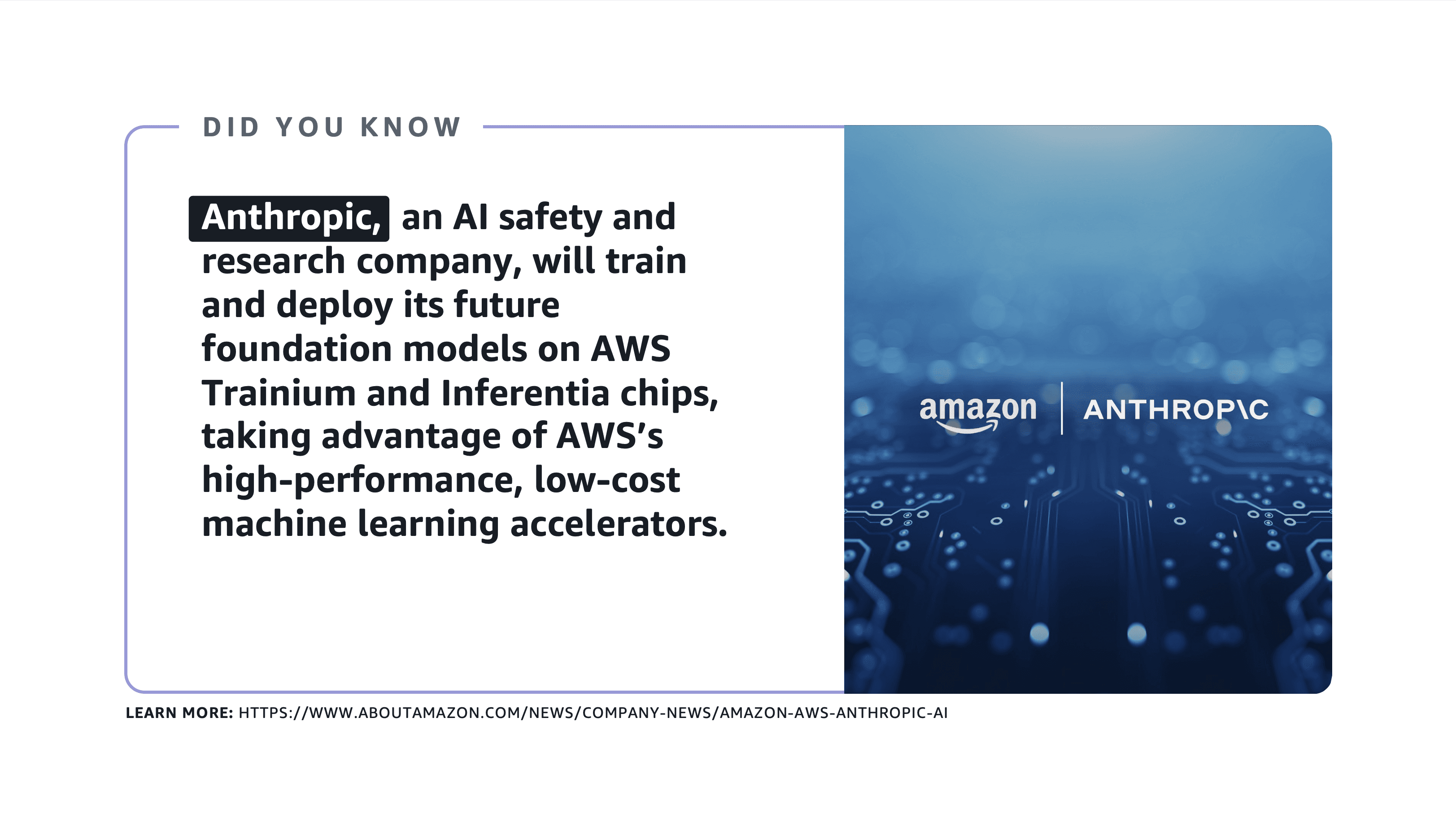
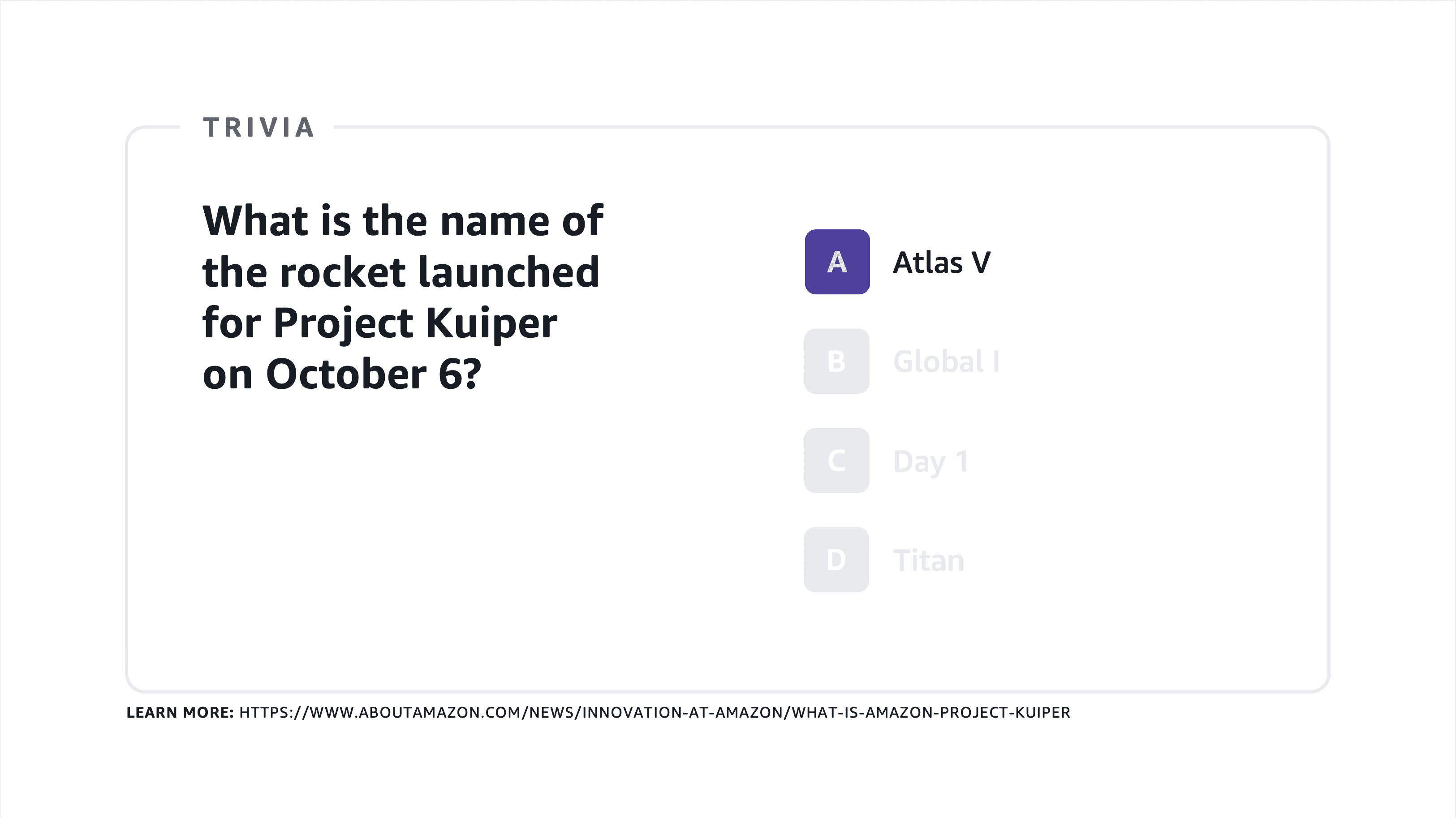
Trivia slides, "Did You Know" moments, QR-code prompts, and learn-more CTAs create shifts in pacing. Each format is designed to be readable, quick to parse, and visually connected to the larger system.